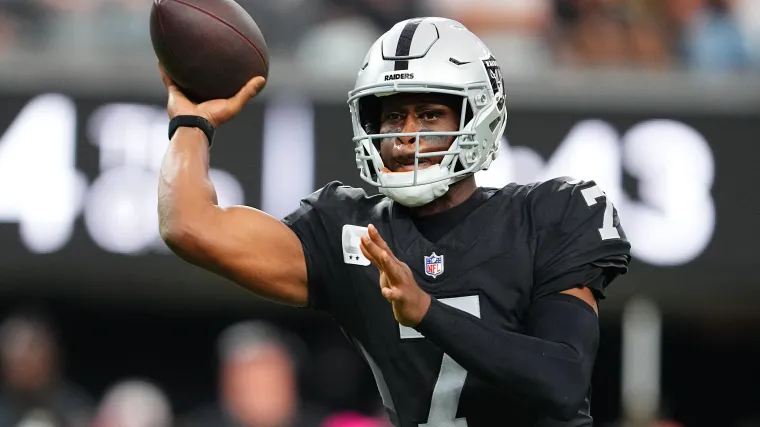
Geno Smith's Bold Assertion: Unpacking the "Better Player" Claim Amidst New York Jets Rumors
The world of NFL football, particularly within the passionate confines of the New York metropolitan area, thrives on speculation, anticipation, and, of course, the ever-present hum of **New York Jets rumors**. Few things ignite fan debate and media analysis quite like a bold statement from a former player, especially one with a unique history with Gang Green. Such was the case when former Jets quarterback Geno Smith reportedly claimed that the team was "getting a better player" than one who had departed. This assertion, glimpsed through headlines from outlets like Gang Green Nation, immediately sent ripples through the fanbase, forcing an examination not just of the claim itself, but of its implications for team dynamics, fan expectations, and the very nature of player evaluation.
Smith's declaration, made during a "glorious Friday in March" according to the original reporting, would have landed squarely in either the crucial free agency period or the lead-up to the NFL Draft. These are times when roster shake-ups are commonplace, and optimism often clashes with the cold reality of transactions. For a former Jet like Smith, who experienced the highs and lows of the franchise firsthand, to weigh in on a specific player exchange carries significant weight. His perspective, forged in the crucible of Florham Park practices and MetLife Stadium games, lends a layer of credibility that few outsiders possess. However, it also opens the door to questions about personal bias, current loyalties, and the ever-shifting landscape of the NFL. Understanding the context of such a claim—who left, who arrived, and what position was impacted—is crucial, though the specific details often become secondary to the sheer audacity of the statement itself.
This kind of bold assertion becomes fodder for countless discussions across sports radio, fan forums, and social media. The "Gang Green Nation," as dedicated followers of the Jets are affectionately known, would undoubtedly dissect every angle. Was Smith throwing shade at the departed player? Was he genuinely impressed by the incoming talent? Or was it simply a strategic soundbite designed to generate buzz? Regardless of the underlying motive, such a claim forces a deeper dive into the metrics and intangibles that define a "better player" in the cutthroat world of professional football. To follow the ongoing pulse of fan and media reaction to such statements, you can always check out sites dedicated to the latest discussions and opinions, like those found at
Gang Green Nation: Latest Jets News & Geno Smith's Player Take.
Defining "Better": Metrics Beyond the Hype in New York Jets Rumors
The subjective nature of the word "better" is at the heart of any such debate. When Geno Smith, or any analyst, declares one player "better" than another, what criteria are they employing? Is it purely statistical output? Is it scheme fit within the Jets' playbook? Or does it encompass intangibles like leadership, locker room presence, or potential for future growth? In the realm of **New York Jets rumors**, objective analysis often takes a backseat to passionate opinions, yet a nuanced understanding requires moving beyond surface-level observations.
Consider the various dimensions of player evaluation:
- Statistical Performance: This is often the easiest metric to quantify. Comparing raw numbers (passing yards, receiving touchdowns, sacks, tackles) provides a baseline. However, stats can be misleading; a player on a struggling team might have inflated numbers due to sheer volume, while a player in a highly efficient system might have fewer touches but greater impact per play.
- Scheme Fit: A player who thrived in one system might struggle in another. The Jets' offensive or defensive scheme could be a critical factor. An incoming player might possess a skillset perfectly tailored to what the coaching staff wants to implement, making them a "better fit" even if their raw talent isn't demonstrably superior.
- Intangibles and Leadership: These are harder to measure but profoundly impact team success. Does the new player elevate those around them? Are they a vocal leader or a lead-by-example type? Do they contribute positively to team morale and culture? A player's character and work ethic can be as crucial as their physical abilities.
- Durability and Injury History: The best player on paper is useless if they're consistently sidelined. An incoming player with a clean bill of health might be considered "better" than a highly talented but perpetually injured outgoing player.
- Contract Value and Cap Space: In the modern NFL, financial considerations are paramount. Acquiring a player who provides comparable or even slightly inferior production at a significantly lower cost can be seen as a "better" move for the overall health of the franchise, allowing for investments elsewhere.
When evaluating Geno Smith's specific claim, one must weigh these factors. Perhaps the "better player" he alluded to wasn't necessarily a statistical upgrade but a superior scheme fit, a stronger leader, or simply a player with more untapped potential. For an in-depth look at similar discussions surrounding player comparisons and impact, particularly concerning Smith's own assessments, you might find valuable insights in articles such as
Geno Smith on Jets' New Player: Is He Better Than Who Left?. The challenge for fans and analysts alike is to look beyond the immediate hype and delve into a holistic evaluation, considering how a new player integrates into the complex tapestry of an NFL roster.
The Ripple Effect: Impact on Team Dynamics and Fan Perception
A statement as direct as Geno Smith's "better player" claim doesn't exist in a vacuum. It has a tangible ripple effect, influencing everything from the locker room atmosphere to the collective psyche of the fanbase. For the New York Jets, a franchise often under the microscope, such external commentary adds another layer to their narrative.
Inside the Locker Room: Morale and Expectations
The most immediate impact would be felt within the team itself. For the incoming player, Smith's endorsement could be a double-edged sword. While it’s a vote of confidence, it also creates immense pressure and high expectations, potentially setting an unfair bar before they've even played a down. Conversely, for the players still on the roster who were teammates with the departed player, Smith's comment could be perceived as dismissive or even insulting to their former comrade. Team chemistry is a delicate balance, and external declarations can inadvertently disrupt it. Coaches and leadership would likely need to address such comments internally, reinforcing team unity and focusing on the present and future.
Shaping Fan Perception and Media Narratives
For the fervent Jets fanbase, such **New York Jets rumors** and declarations become part of the ongoing dialogue. If the new player performs well, Smith's statement is heralded as prophetic. If they struggle, it becomes another talking point for criticism and doubt. The media, always hungry for engaging content, would amplify the claim, using it as a benchmark for the new player's performance. This creates a feedback loop where initial statements influence expectations, which then color the perception of actual performance. This also means that every snap, every play, every statistic of the incoming player is scrutinized against the backdrop of "Is he *really* better than who left?" This intense focus, while stimulating for content creators, can be overwhelming for players.
Historical Context: The Jets and High Expectations
The Jets have a long history of high-profile acquisitions and equally high expectations. From "Broadway Joe" Namath to more recent star signings, the narrative often revolves around the next big hope. Geno Smith's claim taps into this historical pattern, aligning with the perpetual optimism that often precedes the NFL season for Gang Green fans. It speaks to a deep-seated desire for the team to finally turn the corner and acquire that one piece that makes all the difference. Analyzing past Jets' roster moves and how public claims impacted their reception can provide valuable insights into the current situation, reminding us that hype is a powerful, yet often unreliable, predictor of success.
Geno Smith's Legacy and Credibility as a Jets Analyst
Geno Smith's journey with the New York Jets was a tumultuous one, marked by flashes of potential intertwined with significant struggles and injuries. Drafted in the second round in 2013, he started multiple games for the Jets over four seasons, experiencing firsthand the intense pressure and scrutiny that comes with playing quarterback in New York. This unique background forms the bedrock of his credibility when he offers opinions on **New York Jets rumors** and roster moves.
His tenure provided him with an insider's view of the team's operations, coaching philosophies, and locker room dynamics during his time there. He knows the weight of expectations, the specific challenges of playing in the AFC East, and the internal politics that can influence player decisions. This lived experience sets him apart from many external analysts who might only observe from afar. When Smith speaks, he's not just another voice; he's a former teammate, a former starter, someone who wore the green and white.
However, his own career trajectory also adds a layer of complexity to his analysis. Having been part of a struggling Jets team for much of his tenure, some might view his opinions through the lens of a player who ultimately couldn't lead the team to consistent success. Does his perspective reflect a deeper understanding, or is there a degree of hindsight bias or even lingering frustration? As Smith later went on to revitalize his career with the Seattle Seahawks, achieving Pro Bowl status and leading his team to the playoffs, his perspective on player evaluation might have evolved, informed by experiences in a different organizational culture. This evolution, combined with his raw experience in New York, makes his takes particularly compelling for both fans and fellow analysts. Whether one agrees with his specific claims or not, Smith's comments always contribute to the rich tapestry of dialogue surrounding the Jets.
Conclusion
Geno Smith's claim about the New York Jets acquiring a "better player" than one who departed serves as a potent reminder of the constant churn and fervent discussion that defines the NFL, especially for a franchise like the Jets. Such statements, while often fueled by rumor and speculation, ignite critical conversations about player evaluation, team dynamics, and the powerful influence of external commentary. While the exact identities of the players involved might fade from memory, the core question remains: how do we objectively define "better" in a sport replete with variables? Ultimately, these bold declarations, whether proven right or wrong by history, are an indelible part of the **New York Jets rumors** landscape, keeping the Gang Green Nation engaged and forever hopeful for the next true difference-maker. They underscore the fact that in football, as in life, perception often shapes reality, but only performance truly stands the test of time.